
Packing a big multigenerational move in Canterbury-Bankstown
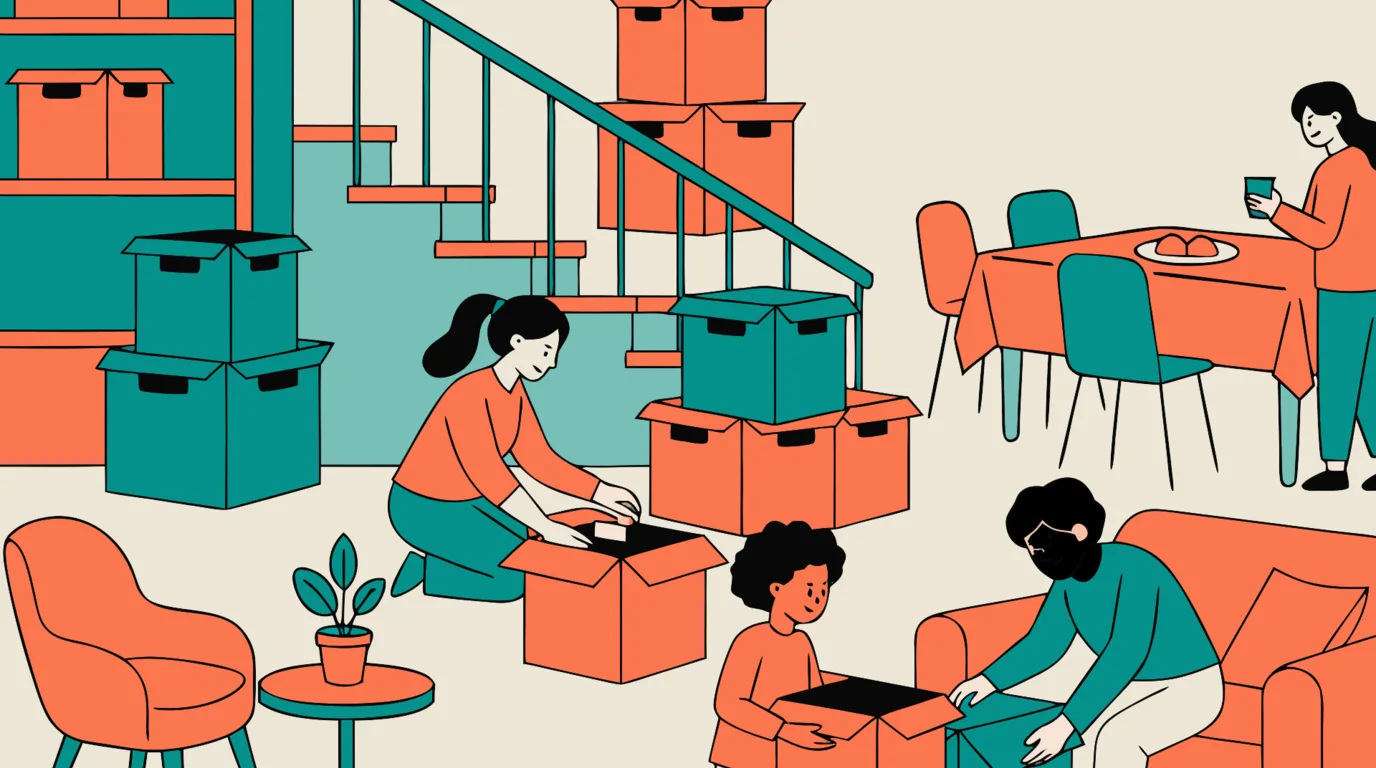
If you have ever helped move a long-held family home in Canterbury-Bankstown, you already know the secret nobody tells you up front: it is always bigger than it looks. The area has some of the largest and most multigenerational households in Sydney, and a home that has held two or three generations for years holds an extraordinary amount of stuff. The room count tells you almost nothing. What fills the truck is the garage, the shed, the kitchen and the cupboards that have quietly absorbed two decades of life.
This is the most common big move we do across Greenacre, Revesby, Padstow and the larger homes of Yagoona and Punchbowl, so here is how to plan it so move day is calm rather than chaotic.
Why a multigenerational home packs into so many boxes
A standard moving guide assumes one household per home. A multigenerational home is really several households layered together: the parents, the adult children, sometimes the grandparents, sometimes a granny flat out the back. Each brings its own clothes, books, kitchen things and keepsakes, and the shared spaces, the formal lounge, the second living area, the garage, fill up on top of all that.
The practical effect is that the carton count climbs faster than people expect. A five-bedroom home with a busy kitchen, a study, a full garage and a shed can run well past a hundred cartons once everything is properly boxed. That is not a problem, it is just a number worth knowing early, because it decides the truck size, the crew and how many days the pack takes. Guessing low is how families end up with a half-loaded second trip at 8pm.
The honest way to size it is to count it before you start. Our box planner asks the rooms and who lives there and gives you an indicative carton breakdown, the truck and the crew, plus a printable checklist.
Sort before you pack
The single most useful thing you can do with a big home is declutter before a box is taped. Three generations accumulate duplicates, the third set of pots, the chairs nobody sits on, the appliances in the back of the garage. Every box you do not pack is one you do not carry, store or unpack at the other end.
Work room by room and keep it simple: keep, donate, sell, recycle. Start three to four weeks out with the rooms you use least (the garage, the shed, the spare room) and leave the kitchen and bedrooms until last because you need them until the end. By the time the truck arrives you want to be moving a home you have chosen to keep, not the full archaeological record of the house.
The room-by-room order that works
- Garage and shed first. These are the slow, heavy rooms and the easiest to do early. Tools and hardware go in small book cartons (heavy things in small boxes, light things in big ones, always). Drain the mower, disconnect the BBQ gas, and ask us about the rules on paint and chemicals.
- Spare rooms and the study next. Photograph the back of the computer before you unplug it so it goes back together in minutes, and keep paperwork together.
- Living areas. Bag and label every cable, wrap the lounges, and box the books and decor. Multiple living areas are where the extra cartons hide.
- Bedrooms. Hanging clothes go straight onto port-a-robe cartons off the rail, which saves hours of folding and re-ironing. Allow about one and a half port-a-robes per bedroom.
- Kitchen last. It is the most carton-dense room in any house and the one you use until the morning of the move. Wrap glassware and pack plates on their edge, not flat, and keep the lids on the pantry boxes tight.
Label everything by room
In a small move you can get away with vague labels. In a big multigenerational move you cannot. Write the destination room on every box, on the side as well as the top, so the crew can place it straight into the right room and you are not opening forty mystery boxes looking for the kettle. Pack one clearly marked essentials box (kettle, mugs, chargers, toiletries, medications, important documents) that travels with you and opens first.
Plan the truck and the days, not just the boxes
A genuinely large home is sometimes a two-truck job, and occasionally the calmest plan is to split it across two days, storing the first load overnight rather than running a frantic single day. Neither is a problem to organise if you know early, which again comes back to having an honest carton count from the start.
When you are ready, plan your boxes to get the estimate and the checklist, then send it through with a quote request and we will size the crew and the truck to your actual home. Big moves are exactly what we are built for in Canterbury-Bankstown.
Common questions
How many boxes does a large multigenerational home need?
It varies with how much you keep, but a four to six bedroom home with a full garage and a well-stocked kitchen commonly runs to well over a hundred cartons. The honest way to size yours is the box planner, which estimates the cartons by type and the truck and crew it implies.
How far ahead should I start packing a big family move?
Start the declutter three to four weeks out and the real packing about two weeks out, a room a day, beginning with the rooms you use least. A large home is too much to pack in the final few days, and rushing it is when things get broken or lost.
Can you pack it all for us?
Yes. We can pack the whole house or just the rooms you would rather not wrap yourself, like the kitchen and the fragile things, and we can take the empty cartons away after you unpack so a big family is not living around a cardboard fort.
Planning a move?
Get a free, no-obligation quote and we'll plan the access at both ends with you.
Get a quote